
Dermal fillers are often perceived as the immediate solution to facial ageing. While they remain an important and effective tool within modern aesthetic medicine, Lucie Royer believes they should never be the starting point for every concern.
As an Independent Nurse Prescriber and founder of Skin & Soul Medical, her philosophy centres on rejuvenation and longevity rather than replacement.
Ageing is frequently misunderstood as a simple loss of volume. In reality, it is a complex biological process involving collagen depletion, elastin breakdown, pigmentation changes, inflammation and thinning of the dermis. When treatment focuses solely on replacing lost volume, the deeper causes of ageing are often left unaddressed. The result can be a face that appears fuller, yet not necessarily healthier.
Dermal fillers are designed to restore structure and support where it has diminished over time. In skilled hands and used conservatively, they can subtly rebalance proportions and soften shadows. However, fillers do not improve skin texture, repair sun damage, strengthen the skin barrier or correct underlying pigmentation. When poor skin quality is mistaken for volume loss, adding filler may create heaviness rather than harmony. For Lucie, true rejuvenation begins not with adding, but with improving.
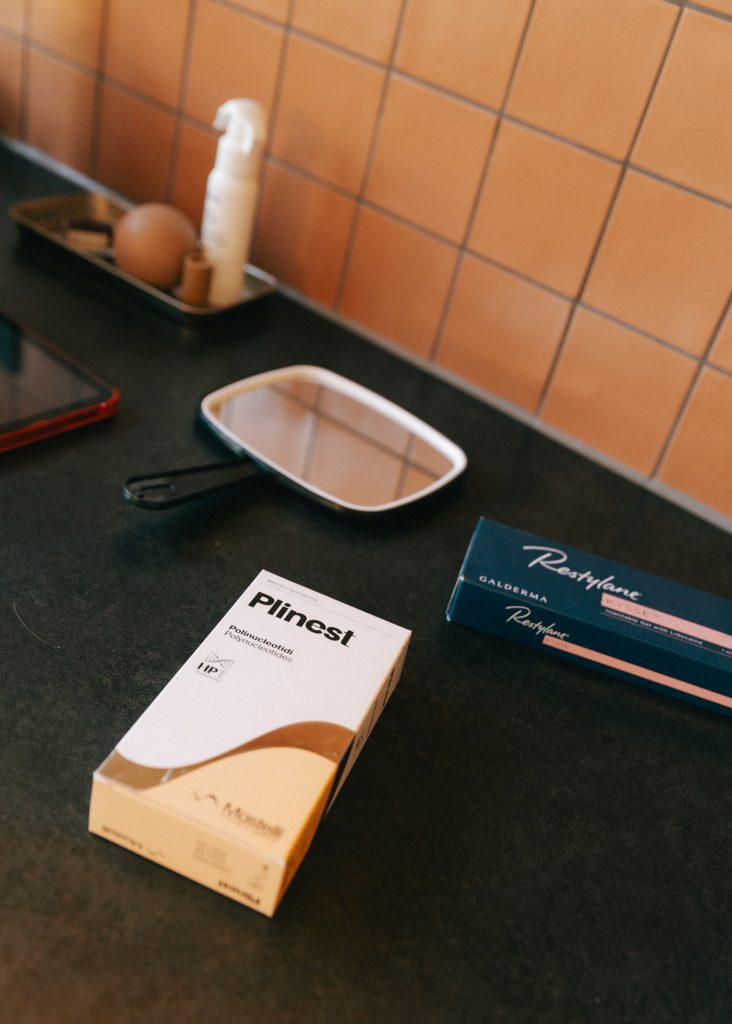
An often-overlooked part of this conversation is the dissolving of filler. In recent years, Lucie has seen an increasing number of patients seeking reversal of previous treatments. Migration, overcorrection or simply a change in aesthetic preference can all lead patients to feel that their filler no longer reflects how they wish to look. Using hyaluronidase to dissolve hyaluronic acid-based filler can be a safe and effective way to restore natural contours when performed by an experienced medical professional. Importantly, dissolving is not a failure; it is a reset. In many cases, removing poorly placed or excessive filler allows the underlying anatomy to re-emerge and creates space for a more refined, skin-focused treatment plan. Sometimes the most powerful aesthetic decision is to step back rather than add more.
At the core of Lucie’s approach is pharmaceutical-grade skincare. It is the foundation of every treatment plan rather than an optional extra. Unlike over-the-counter formulations, pharmaceutical-grade products contain clinically proven active ingredients in therapeutic concentrations capable of producing measurable biological change within the skin. Ingredients such as retinoids, stabilised vitamin C, peptides and targeted pigment inhibitors work to stimulate collagen, regulate cell turnover and support barrier repair. Without this foundation, in-clinic procedures rarely achieve their full potential.
In-clinic treatments are then used to strengthen and regenerate the skin at a deeper level. Medical-grade chemical peels, when carefully prescribed, stimulate controlled renewal and can significantly improve tone, texture and luminosity. Microneedling harnesses the body’s natural wound-healing response to trigger collagen and elastin production, making it particularly effective for acne scarring, enlarged pores and early skin laxity. These treatments work with the skin’s own biology, encouraging repair and resilience rather than simply masking concerns.
Regenerative injectables such as skin boosters and polynucleotides have further transformed the landscape of aesthetic medicine. Unlike traditional fillers, these treatments do not aim to alter facial structure. Instead, they enhance tissue repair and improve hydration at a cellular level. The outcome is skin that appears healthier, stronger and more luminous, without changing facial proportions. Patients often describe looking fresher and more rested rather than visibly treated.
Laser technology also plays a significant role within a comprehensive treatment strategy. Advanced laser devices allow practitioners to address pigmentation, vascular irregularities, acne scarring and collagen loss with precision. By targeting underlying damage within the dermis, laser treatments can create meaningful improvement in skin quality that injectables alone cannot achieve.
Lucie’s skin-first philosophy reflects a broader shift within aesthetic medicine towards subtle, regenerative results. Rather than chasing trends or relying heavily on volume, her approach is layered and strategic: optimise skin health, stimulate regeneration, protect and maintain. Interestingly, once the skin has been strengthened and revitalised, many patients find they need far less filler than they initially anticipated.
For Lucie Royer, dermal filler remains a valuable instrument, but it is only one component of a far more nuanced approach. By prioritising pharmaceutical-grade skincare, medical facial treatments, regenerative injectables and advanced laser technologies, aesthetic medicine moves beyond simply adding volume. It restores vitality.
The Skin & Soul Medical medical injectors ethos remains ‘to practise with soul’.
Find out more about Lucie’s Journey and Skin & Soul Medical over on @skinandsoulmedical and www.skinandsoulmedical.com
